Presentation
These days, vicious challenge is among the telecom hardware industry. Making progress in this market isn't a simple undertaking to do as such. Nonetheless, a Chinese organization – Huawei, which was turning into a worldwide corporate, was considered as a "China Achievement". In spite of the fact that despite everything it abandoned the more prominent challenger – Cisco, it developed rapidly and might danger to Cisco. Before talking about how it can reinforce it's abilities and challenge Cisco, the essential examination is to distinguish it's assets and center skills
Huawei Technologies was established in 1998 by Ren Zhengfei who is a previous People's ... This isn't a case of the work delivered by our Essay Writing Service. .... Utilizing the PESTL model, we will assemble the data and investigate each ... (China's home developed standard) portable handsets and systems types of gear
A cell phone, PDA, cellphone, or hand telephone, once in a while abbreviated to just versatile, ..... (5.7%), and Vivo (6.5%). During Q2 2018, Huawei surpassed Apple as the world's second-biggest telephone producer. ...... Versatile Learning: Essays on Philosophy, Psychology and Education, 2003; Nyíri, Kristóf, ed. Versatile
Wednesday, July 3, 2019
OPPO Mobile Information:
OPPO PHONES. OPPO Electronics Corp. is a hardware maker situated in Guangdong, China. Known for its cell phones, the organization additionally makes MP3 players, compact media players, LCD-TVs, and DVD/Blu-beam players. It was established in 2004
Oppo's most recent portable dispatch is the Reno Z. The cell phone was propelled in 30th May 2019. The telephone accompanies a 6.40-inch touchscreen show with a goals of 1080 pixels by 2340 pixels. The Oppo Reno Z is fueled by 2GHz octa-center MediaTek Helio P90 processor and it accompanies 6GB of RAM
The quickest developing cell phone creator all around — by a long shot — is a little-realized gadgets organization situated in China called OPPO. ... OPPO doesn't sell straightforwardly in the U.S., yet its most current F1 Plus, an a la mode Android 5.1 (Lollipop) telephone with a 5.5-in. ... "OPPO has gotten a great deal of worldwide ..
Oppo's most recent portable dispatch is the Reno Z. The cell phone was propelled in 30th May 2019. The telephone accompanies a 6.40-inch touchscreen show with a goals of 1080 pixels by 2340 pixels. The Oppo Reno Z is fueled by 2GHz octa-center MediaTek Helio P90 processor and it accompanies 6GB of RAM
The quickest developing cell phone creator all around — by a long shot — is a little-realized gadgets organization situated in China called OPPO. ... OPPO doesn't sell straightforwardly in the U.S., yet its most current F1 Plus, an a la mode Android 5.1 (Lollipop) telephone with a 5.5-in. ... "OPPO has gotten a great deal of worldwide ..
Vivo Mobile Information:
Terrible processor, awful presentation simply playing the promoting game. Better purchase a Xiaomi or OnePlus even Samsung offers preferred telephone over Vivo in mid range fragment. The Chinese cell phones are everywhere throughout the Indian market and we as cell phone customers have had faith in their ability. ... Vivo is great however costly
Vivo is a Chinese innovation organization possessed by BBK Electronics that makes cell phones, cell phone adornments, programming, and online administrations. Vivo Mobile forayed into the Indian market in December 2014 and inside a year, the organization has collected brand acknowledgment and mindfulness crosswise over India
Vivo Communication Technology Co. Ltd., known as Vivo, is a Chinese innovation organization claimed by BBK Electronics that plans and fabricates cell phones, cell phone extras, programming, and online administrations, which are then sold in India
Vivo Electronics Corp. is a telephone brand situated in Dongguan, Guangdong, China. It was established in 2009. The organization is another Chinese cell phone creator to enter India as of late. It makes ease Android telephones, and those in the mid-run portion of the market
Hennessey Venom F5: 301 MPH:
The motor is professed to push out 1600 strength at 7200 RPM, and 1300 lb-ft of torque at 4400 RPM. Not at all like the Venom GT's motor, which depends on a Chevy LS V8, a Hennessey representative discloses to us this one is absolutely bespoke
Hennessey's last supercar, the Venom GT, hit a top speed of 270 mph with only 1,244 hp, yet was hampered by poor optimal design. The Venom F5 has an a lot sleeker body, with course through air channels and a movable back spoiler that can be arranged to expand its greatest speed.
Zero to 249 mph (400 km/h) and back to rest will be under 30 seconds. The top speed of the Venom F5 is anticipated to surpass 300 mph. The base cost for the Venom F5 is $1.6 million US dollars. The organization intends to manufacture 24 models.
Koenigsegg CCXR Trevita:
Take this 2010 Koenigsegg CCXR Trevita for example. Mayweather repurchased it route in 2015 at an announced cost of $4.8 million. He sold it of for an amazingly lower aggregate of $2.6 million
The CCX was delivered somewhere in the range of 2006 and 2010 and the absolute creation added up to 49 vehicles (30 CCX, 9 CCXR, 6 CCX/CCXR Edition, 2 CCXR Special Edition and 2 CCXR Trevita). One of them was a CCX utilized for Crash tests and the other was a CCXR which is as yet a manufacturing plant test vehicle.
It isn't unlawful to possess a Koenigsegg Agera in the U.S. Be that as it may, Koenigseggs are not road legitimate in the U.S. because of their failure to fulfill certain government guidelines. The main exemption that is road legitimate in the U.S. the Koenigsegg CCX.
About Cars:
Advantages of having a car:
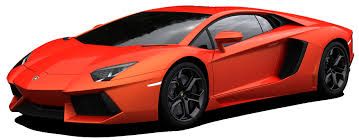
The private vehicle is an advantageous method of transportation. Having progressively agreeable seats, ventilation or other novel advances help individuals to feel superior to anything utilizing different techniques, similar to a bike or an open transport.Clients have a progressively secure protection contrasted with utilizing open transportation.
This will expand more openings for work since more specialists will be associated with working in vehicle organizations or as drivers, diminishing the joblessness rate.
The neighborhood state will have more spending plans, paid via vehicle proprietors' expenses, to reestablish the streets. Every year, vehicle drivers need to pay many dollars for reestablishing their vehicle protection, permit, tickets, or air care.
Different enterprises have been created as vehicle ventures created. The more people utilize increasingly private autos, the more vehicle organizations need to raise their innovation, driving other mother enterprises to be grown as well.
Individuals can have outright opportunity on choosing the calendar and streets to achieve their goal.
A private vehicle proprietor can use his time however it is hard to do as such on an open transport.
In a vehicle, an individual does not need to stress over the residue, clamor and exhaust present in the street while in open transportation it isn't constantly conceivable to stay away from those.
Disadvantages of having a car:
Owning a vehicle is costly and requires extra expenses to keep up and fix it. Not all families can bear the cost of it.
Vehicles have expanded the degree of air and clamor contamination in urban areas, making more people experience the ill effects of respiratory, heart ailments, or malignancies.
City explorers need to spend longer hours on car influxes. Utilizing progressively private vehicle, the thickness of traffic has been expanded remarkably and residents have needed to remain longer time on traffic load.
As the quantity of private vehicles expanded, more vehicle travelers have been harmed or kicked the bucket by serious mishaps.
More people on foot's mishaps have been accounted for every year. As the utilization of private vehicles expands, it is progressively plausible that individuals strolling through the road kick the bucket by them.
Private vehicle is more costly than the open transportation. Paying tremendous cash for duty, reestablishing of permit, or air care, individuals need to pay more for utilizing vehicles.
Increasingly petroleum derivatives are devoured as more autos are utilized by individuals, driving different ages to confront a deficiency of these energizes.
The legislative cost will be raised far significantly. To construct and support of more thruways for more autos, procure more police power, the nearby government need to think about a bigger spending plan.
The utilization of autos to drive has diminished the normal soundness of vehicle clients as they don't have to do any physical development.
The utilization of powers to run the vehicle is adding to the ascent if an Earth-wide temperature boost and influencing the ozone layer.
The vehicle proprietors need to stress over the wellbeing and leaving places for autos any place s/he voyages.
It spares the time as the workers can achieve his goal rapidly than it would be required in an open transport.
Monday, July 1, 2019
Sunday, June 30, 2019
Cricket Introduction:
Cricket is a bat-and-ball game played between two groups of eleven players on a field at the focal point of which is a 20-meter (22-yard) pitch with a wicket at each end, each including two safeguards adjusted on three stumps. The batting side scores keeps running by striking the ball bowled at the wicket with the bat, while the bowling and handling side attempts to avoid this and reject every player (so they are "out"). Methods for rejection incorporate being bowled, when the ball hits the stumps and removes the safeguards, and by the handling side getting the ball after it is hit by the bat, yet before it hits the ground. At the point when ten players have been expelled, the innings closes and the groups swap jobs. The game is mediated by two umpires, helped by a third umpire and match official in universal matches. They speak with two off-field scorers who record the match's factual data.
There are different organizations going from Twenty20, played over a couple of hours with each group batting for a solitary innings of 20 overs, to Test matches, played more than five days with boundless overs and the groups each batting for two innings of boundless length. Generally cricketers play on the whole white unit, yet in restricted overs cricket they wear club or group hues. Notwithstanding the fundamental unit, a few players wear defensive apparatus to counteract damage brought about by the ball, which is a hard, strong spheroid made of compacted cowhide with a somewhat raised sewn crease encasing a plug center which is layered with firmly wound string.
Generally, cricket's sources are dubious and the soonest unequivocal reference is in south-east England amidst the sixteenth century. It spread all inclusive with the development of the British Empire, prompting the principal worldwide matches in the second 50% of the nineteenth century. The game's administering body is the International Cricket Council (ICC), which has more than 100 individuals, twelve of which are full individuals who play Test matches. The game's principles are held in a code called the Laws of Cricket which is claimed and kept up by Marylebone Cricket Club (MCC) in London. The game is pursued principally in the Indian subcontinent, Australasia, the United Kingdom, Ireland, southern Africa and the West Indies, its globalization happening during the development of the British Empire and staying prominent into the 21st century.[1] Women's cricket, which is composed and played independently, has additionally accomplished universal standard. The best side playing universal cricket is Australia, having won seven One Day International trophies, including five World Cups, more than some other nation and having been the top of the line Test side more than some other nation.
Origins
Cricket is a bat-and-ball game played between two groups of eleven players on a field at the focal point of which is a 20-meter (22-yard) pitch with a wicket at each end, each including two safeguards adjusted on three stumps. The batting side scores keeps running by striking the ball bowled at the wicket with the bat, while the bowling and handling side attempts to avoid this and reject every player (so they are "out"). Methods for rejection incorporate being bowled, when the ball hits the stumps and removes the safeguards, and by the handling side getting the ball after it is hit by the bat, yet before it hits the ground. At the point when ten players have been expelled, the innings closes and the groups swap jobs. The game is mediated by two umpires, helped by a third umpire and match official in universal matches. They speak with two off-field scorers who record the match's factual data.
There are different organizations going from Twenty20, played over a couple of hours with each group batting for a solitary innings of 20 overs, to Test matches, played more than five days with boundless overs and the groups each batting for two innings of boundless length. Generally cricketers play on the whole white unit, yet in restricted overs cricket they wear club or group hues. Notwithstanding the fundamental unit, a few players wear defensive apparatus to counteract damage brought about by the ball, which is a hard, strong spheroid made of compacted cowhide with a somewhat raised sewn crease encasing a plug center which is layered with firmly wound string.
Generally, cricket's sources are dubious and the soonest unequivocal reference is in south-east England amidst the sixteenth century. It spread all inclusive with the development of the British Empire, prompting the principal worldwide matches in the second 50% of the nineteenth century. The game's administering body is the International Cricket Council (ICC), which has more than 100 individuals, twelve of which are full individuals who play Test matches. The game's principles are held in a code called the Laws of Cricket which is claimed and kept up by Marylebone Cricket Club (MCC) in London. The game is pursued principally in the Indian subcontinent, Australasia, the United Kingdom, Ireland, southern Africa and the West Indies, its globalization happening during the development of the British Empire and staying prominent into the 21st century.[1] Women's cricket, which is composed and played independently, has additionally accomplished universal standard. The best side playing universal cricket is Australia, having won seven One Day International trophies, including five World Cups, more than some other nation and having been the top of the line Test side more than some other nation
Growth of amateur and professional cricket in England
In spite of the fact that the principle object of the game has dependably been to score the most runs, the early type of cricket varied from the cutting edge game in certain key specialized perspectives. The ball was bowled underarm by the bowler and up and down the ground towards a batsman equipped with a bat that, fit as a fiddle, took after a hockey stick; the batsman protected a low, two-stump wicket; and runs were classified "indents" in light of the fact that the scorers recorded them by scoring count sticks.[13][14][15]
In 1611, the year Cotgrave's word reference was distributed, ministerial court records at Sidlesham in Sussex express that two parishioners, Bartholomew Wyatt and Richard Latter, neglected to go to chapel on Easter Sunday since they were playing cricket. They were fined 12d each and requested to do penance.[16] This is the most punctual notice of grown-up support in cricket and it was around a similar time that the soonest realized composed between ward or town match was played – at Chevening, Kent.[5][17] In 1624, a player called Jasper Vinall kicked the bucket after he was inadvertently struck on the head during a match between two area groups in Sussex.[18]
Cricket remained a relaxed neighborhood interest for a significant part of the century.[9] It is known, through various references found in the records of religious court cases, to have been restricted on occasion by the Puritans previously and during the Commonwealth.[19][20] The issue was about dependably the issue of Sunday play as the Puritans believed cricket to be "profane" whenever played on the Sabbath, particularly if huge groups and additionally betting were involved.[21][22]
As per the social history specialist Derek Birley, there was an "extraordinary upsurge of game after the Restoration" in 1660.[23] Gambling on game turned into an issue huge enough for Parliament to pass the 1664 Gambling Act, restricting stakes to £100 which was regardless a huge entirety surpassing the yearly pay of 99% of the population.[23] Along with prizefighting, horse dashing and blood sports, cricket was seen to be a betting sport.[24] Rich supporters made counterparts for high stakes, shaping groups in which they drew in the primary expert players.[25] By the century's end, cricket had formed into a noteworthy game which was spreading all through England and was at that point being taken abroad by English sailors and colonizers – the most punctual reference to cricket abroad is dated 1676.[26] A 1697 paper report makes due of "an incredible cricket coordinate" played in Sussex "for fifty guineas each" – this is the soonest known match that is by and large thought to be top-class.[27][28]
The supporters, and different players from the social class known as the "nobility", characterized themselves as "amateurs"[fn 1] to set up a reasonable refinement versus the experts, who were constantly individuals from the common laborers, even to the point of having separate changing and feasting facilities.[29] The upper class, including such high-positioning nobles as the Dukes of Richmond, applied their respect code of noblesse oblige to case privileges of initiative in any wearing challenges they partook in, particularly as it was essential for them to play close by their "social inferiors" if they somehow happened to win their bets.[30] In time, an observation grabbed hold that the run of the mill novice who played in top of the line cricket, until 1962 when crudeness was annulled, was somebody with a government funded school instruction who had then gone to one of Cambridge or Oxford University – society demanded that such individuals were "officials and honorable men" whose fate was to give leadership.[31] In an absolutely money related sense, the cricketing beginner would hypothetically case costs for playing while his expert partner played under contract and was paid a compensation or match expense; by and by, numerous novices guaranteed to some degree more than genuine use and the criticizing term "shamateur" was authored to portray the disorder
Cricket in the 18th and 19th centuries
The game experienced significant improvement in the eighteenth century to turn into England's national sport.[citation needed] Its prosperity was endorsed by the twin necessities of support and betting.[34] Cricket was conspicuous in London as ahead of schedule as 1707 and, in the center long periods of the century, enormous groups rushed to matches on the Artillery Ground in Finsbury.[citation needed] The single wicket type of the game pulled in colossal groups and bets to coordinate, its prevalence cresting in the 1748 season.[35] Bowling experienced an advancement around 1760 when bowlers started to pitch the ball as opposed to rolling or skimming it towards the batsman. This caused an upset in bat plan in light of the fact that, to manage the skipping ball, it was important to present the advanced straight bat instead of the old "hockey stick" shape.[36][citation needed]
The Hambledon Club was established during the 1760s and, for the following twenty years until the arrangement of Marylebone Cricket Club (MCC) and the opening of Lord's Old Ground in 1787, Hambledon was both the game's most prominent club and its central point.[citation needed] MCC rapidly turned into the game's head club and the caretaker of the Laws of Cricket. New Laws presented in the last piece of the eighteenth century incorporated the three stump wicket and leg before wicket (lbw).[37]
The nineteenth century saw underarm bowling supplanted by first roundarm and afterward overarm bowling. The two advancements were controversial.[38] Organization of the game at area level prompted the making of the region clubs, beginning with Sussex in 1839.[39] In December 1889, the eight driving region clubs framed the official County Championship, which started in 1890.[40]
The most popular player of the nineteenth century was W. G. Elegance, who began his long and compelling vocation in 1865. It was particularly during the vocation of Grace that the refinement among novices and experts ended up obscured by the presence of players like him who were ostensibly novice at the same time, as far as their monetary profit, accepted proficient. Elegance himself was said to have been paid more cash for playing cricket than any professional.[citation needed]
The most recent two decades before the First World War have been known as the "Brilliant Age of cricket". It is a nostalgic name incited by the aggregate feeling of misfortune coming about because of the war, yet the period produced some incredible players and significant matches, particularly as composed challenge at region and Test level created.
World becomes an international sport
In the interim, the British Empire had been instrumental in spreading the game abroad and by the center of the nineteenth century it had turned out to be settled in Australia, the Caribbean, India, New Zealand, North America and South Africa.[42] In 1844, the primary ever universal match occurred between the United States and Canada.[43] In 1859, a group of English players went to North America on the principal abroad tour.[44]
In 1862, an English group made the primary voyage through Australia.[45] The main Australian group to travel abroad comprised of Aboriginal stockmen who visited England in 1868.[46]
In 1876–77, an England group partook in what was reflectively perceived as the first-since forever Test coordinate at the Melbourne Cricket Ground against Australia.[47] The competition among England and Australia brought forth The Ashes in 1882, and this has remained Test cricket's most celebrated contest.[48] Test cricket started to grow in 1888–89 when South Africa played Englan
World Cricket in the 20th century
The between war years were commanded by Australia's Don Bradman, measurably the best Test batsman ever. Test cricket kept on growing during the twentieth century with the expansion of the West Indies (1928), New Zealand (1930) and India (1932) preceding the Second World War and afterward Pakistan (1952), Sri Lanka (1982), Zimbabwe (1992) and Bangladesh (2000) in the post-war period.[49][50] South Africa was restricted from global cricket from 1970 to 1992 as a component of the politically-sanctioned racial segregation blacklist
Saturday, June 29, 2019
Subscribe to:
Posts (Atom)


